
Maximize Your Savings with Hybrid Water Heaters
If you're replacing an electric water heater, you've probably heard about heat pump models and wondered if the higher price tag is worth it.
Whether they make sense for your home depends on several factors: your current energy costs, how long you plan to stay in your home, available installation space, and what rebates you qualify for. The federal government currently offers a tax credit for heat pump water heaters that ends on December 31, 2025.
This guide explains the costs, available incentives, and situations where heat pump water heaters provide good value compared to standard electric models.
Interested in a heat pump water heater, but unsure which one to choose? Use the residential water heater selector to find options that work for your specific needs.

Water Heater Selector Quiz


Need Help From A Pro?
A. O. Smith water heaters are professionally installed by local independent contractors.
Understanding the Cost Difference
Heat pump water heaters have a higher purchase price than standard electric tanks. A complete project, including the unit and professional installation, typically costs more than replacing it with a comparable standard electric model.
The operating costs tell a different story. A family of four typically spends $800-900 annually on water heating with a standard electric unit. With a heat pump water heater, that drops to $200-300 per year—around $600 in annual savings on energy bills.
Over 10 years, those savings can add up to $6,000. Learn more about cost savings with hybrid water heaters and how different usage patterns affect your potential savings.
How Long Until You Break Even?
The payback period depends on the price difference between models and available incentives. Without any rebates or tax credits, most homeowners see payback in roughly 5-7 years. After that, the continued energy savings represent money that would otherwise go toward higher electricity bills.
Heat pump water heaters use less electricity because they work differently from standard electric models. Instead of generating heat directly through electric resistance elements, they move heat from the surrounding air into the water tank. This process uses up to 70% less electricity, making heat pump water heaters 4 times more efficient than standard models.
Federal Tax Credits and Local Rebates

The federal tax credit for heat pump water heaters covers 30% of total project costs, including both the unit and professional installation, up to $2,000. A $5,000 project would qualify for the full $2,000 credit, while a $4,500 project would yield $1,350.
This credit expires December 31, 2025. After that date, the incentive program ends.
To claim the credit, you'll file IRS Form 5695 with your regular tax return. As of 2025, the form requires the manufacturer's four-digit code. A. O. Smith's Qualified Manufacturer (QM) code A5X5, which verifies your water heater qualifies.
You can also claim up to $1,200 in the same tax year for other energy-efficient home improvements like windows, doors, or insulation. Combined with the heat pump credit, total federal tax savings can reach $3,200 if you're making multiple upgrades.

Additional Savings From Utility Rebates
Local utility companies often provide additional rebates for energy-efficient water heaters. Rebate amounts vary based on location and utility provider. Many utilities require demand response capabilities, which A. O. Smith's Voltex® series heat pump water heaters include.
A $4,500 heat pump water heater project minus a $2,000 federal tax credit equals $2,500 in effective cost. Add any local utility rebates available in your area, and the price difference compared to a standard electric water heater gets smaller.
With these incentives included, payback periods typically drop to 2-4 years instead of 5-7 years. After that, you continue saving $600 annually for the remaining life of the unit—typically 12-15 years.
A. O. Smith's rebate center shows what products in your area are eligible for rebates.
Situations Where Heat Pump Water Heaters Make Sense
Heat pump water heaters provide the most value when replacing an existing electric tank water heater. You're comparing operating costs directly, which is where the savings show up most clearly.
You're Planning to Stay in Your Home
If you plan to stay in your home for 5+ years, you have time to recoup your investment through energy savings. Someone planning to move in a year or two might not see full payback, even with available incentives.
You Have Adequate Space
Heat pump water heaters need at least 450 cubic feet of air space around the unit to operate properly. This means they work better in basements, garages, or large utility rooms rather than small closets where traditional water heaters might fit. The units operate most efficiently in spaces that stay above 37°F, though built-in electric resistance elements automatically turn on during very cold weather to maintain hot water supply.
Environmental Impact Matters to You
Heat pump water heaters also use up to 70% less energy than standard electric models. That's equivalent to removing a car from the road for six months annually in terms of carbon footprint reduction.
Situations Where You Might Want to Reconsider

Heat pump water heaters might not work well in certain situations:
- Very Limited Space: Less than 450 cubic feet may not meet ventilation requirements. A. O. Smith offers ducting kits that can help in some cases, but very tight spaces might require a different solution.
- Short-term Homeownership: Planning to move within 1-2 years means you probably won't recoup your investment through energy savings, even with available rebates and tax credits.
- Low Hot Water Usage: Single-person households with minimal hot water needs will see smaller annual savings than the typical $600 figure.
- Emergency Replacements: If your current water heater failed and you need hot water immediately, you might not have time for the professional assessment and installation planning that heat pump water heaters require.
- Very Tight Budget: Even with rebates and tax credits, heat pump water heaters require more upfront investment than standard electric models.
If any of these situations apply to you, talk with a professional installer about whether a heat pump water heater or a high-efficiency standard electric tank makes more sense for your home.
What You Get with a Heat Pump Water Heater
Beyond lower utility bills, heat pump water heaters deliver different performance characteristics than standard electric models.
Superior Energy Efficiency
Energy efficiency is the main difference. With UEF ratings up to 3.88 compared to around 0.62 for standard electric models, heat pump water heaters are 4 times more efficient. That substantial reduction in electricity use—up to 70% compared to standard models—translates directly to lower bills and reduced environmental impact.
Better Hot Water Performance
A 50-gallon heat pump water heater provides longer showers than a standard electric tank of the same size. Back-to-back showers don't run out of hot water as quickly, and larger bathtubs can be filled more easily than with standard electric units of comparable size.
Quiet Operation and Smart Features
A. O. Smith heat pump water heaters operate about as quietly as a high-efficiency dishwasher. You'll hear them running, but they're not particularly loud. Smart features, such as Wi-Fi connectivity, anti-leak detection, and diagnostic capabilities, come standard on many models.
Durability and Warranty Protection
A 10-year limited warranty covers these units, and they typically last 12-15 years. That's several years longer than many standard electric water heaters. ENERGY STAR® certification verifies the efficiency ratings.
Product Comparison
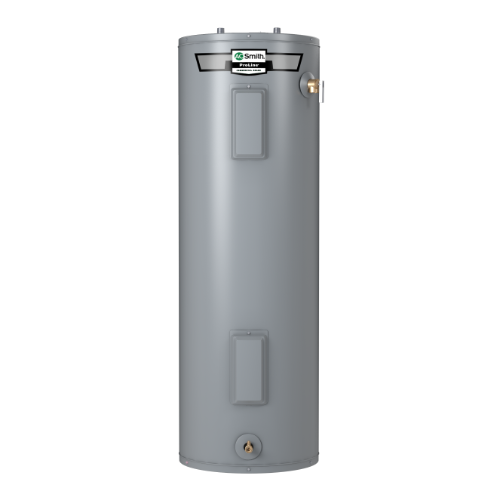
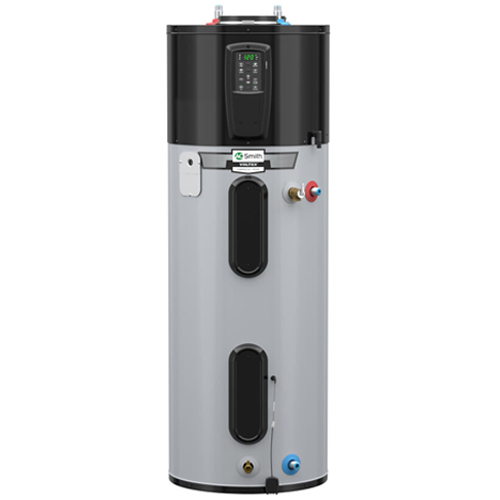
No Tax Credits or Rebates Available
*Many factors affect the actual performance of a water heater. This represents our closest approximation of your likely experience with this water heater in your local area, but actual performance may vary depending on factors beyond our ability to control or estimate.
The 2029 Regulation Timeline
Starting May 6, 2029, new Department of Energy efficiency standards require electric tank water heaters 35 gallons or larger to use heat pump technology.
If you're replacing your electric water heater soon, this timeline creates a clear advantage for acting now. The federal tax credit expires December 31, 2025—more than three years before the mandate takes effect. Installing now means you can claim the $2,000 credit while it's available and start saving on energy costs immediately.
As these regulations approach, demand for heat pump water heaters will increase, potentially leading to supply constraints and higher prices. A. O. Smith launched its first heat pump water heater in 2010. The Voltex® series has been in homes across the country for over a decade. Early adopters get both established technology and current incentives, rather than waiting until everyone needs to upgrade at the same time.
Whether you install now or wait closer to 2029, heat pump water heaters will become standard for larger electric tanks. The difference is whether you benefit from current incentives and years of energy savings, or wait until they're mandatory and potentially more expensive.
Next Steps
A. O. Smith's water heater selector asks questions about your household's hot water habits—shower patterns, simultaneous usage, and local climate—to recommend specific models that fit your needs.
The rebate center shows what federal tax credits and local utility programs are available based on your zip code. Enter your location to see current incentives in your area.
Ready to move forward? A. O. Smith works with certified contractors in your area who can evaluate your home's space availability, electrical setup, and installation requirements to determine if a heat pump water heater will work in your situation.
Rebates & Tax Credits
Rebate and incentive programs provide savings to consumers for the purchase of water heaters that meet certain energy efficiency standards.
Use A. O. Smith's Qualified Manufacturer (QM) code A5X5 for federal tax return form 5695.

Need Help From A Pro?
A. O. Smith water heaters are professionally installed by local independent contractors.
A. O. Smith: Decades of Water Heating Expertise
A. O. Smith has been developing water heating solutions for American homes and businesses for over 85 years. From the world's largest water heater factory in Ashland City, Tennessee, to a nationwide network of certified installers, A. O. Smith designs and builds everything from traditional tank water heaters to advanced heat pump and tankless systems.
A. O. Smith has manufactured heat pump water heaters since 2010. The Voltex® models are ENERGY STAR® certified and 4 times more efficient than standard electric units, helping homeowners reduce energy costs without sacrificing hot water availability.
Frequently Asked Questions
With federal tax credits and local rebates, most homeowners see payback in 2-4 years through reduced energy bills. Without incentives, typical payback is 5-7 years based on $600 annual savings.
A. O. Smith heat pump water heaters operate efficiently down to 37°F. Below that temperature, built-in electric resistance elements automatically activate to maintain your hot water supply.
Total project costs typically range from $3,500-$5,500 depending on location and installation requirements. The federal tax credit (up to $2,000) reduces costs. Local utility rebates may provide additional savings depending on your area.