
Is Your Hot Water Not Getting Hot? Common Causes & What To Do About Them
Reasons You May Have No Hot Water
When you turn on your faucet or shower expecting warm water, and you're met with icy cold water, it can be inconvenient and frustrating. The source of the problem could be something relatively simple to fix, such as a tripped circuit breaker, or more complex, such as a malfunctioning heating element.
Table of Contents
- Safety Precautions Before Troubleshooting
- Common Causes of Hot Water Not Getting Hot and How to Fix It
- Discolored/Smelly Water
- Water Heater Is Leaking
- Tank Making Strange Sounds
- Water Heater Condensation
- Damaged Gas Control or Burner Assembly
- Avoid Future Issues With Regular Maintenance
- Learn More About Tankless Water Heaters
In this guide, we'll share some of the most common water heater issues, give you advice on diagnosing them, and share practical steps for resolution. We'll also give you tips on finding a trusted service provider and how to choose a new water heater should your existing water heater be beyond repair.

Water Heater Selector Quiz


Need Help From A Pro?
A. O. Smith water heaters are professionally installed by local independent contractors.
Safety Precautions Before Troubleshooting
Water heaters use electricity or gas to produce scalding hot water, operate at high pressure, and produce hot water that can scald if appropriate precautions are not used. Here's what you need to know before attempting any troubleshooting:
- Electric Water Heaters: Turn off power at the circuit breaker before touching anything. High-voltage electricity can kill, and water heater components remain live even when the unit isn't actively heating.
- Gas Water Heaters: If you smell rotten eggs or suspect a gas leak for any reason, turn off the gas supply valve immediately and call a professional—don't continue to troubleshoot and don't try to diagnose the problem yourself.
- Hot Surfaces and Pressure: Let your water heater cool down completely before removing any panels or touching components. If you touch the pressure relief valve while the water heater is running, scalding water can shoot out, causing serious burns.
- When in Doubt: If you're not completely comfortable working on your water heater, call a licensed plumber. They have the training, tools, and insurance to handle repairs safely.
Common Causes of Hot Water Not Getting Hot and How to Fix It
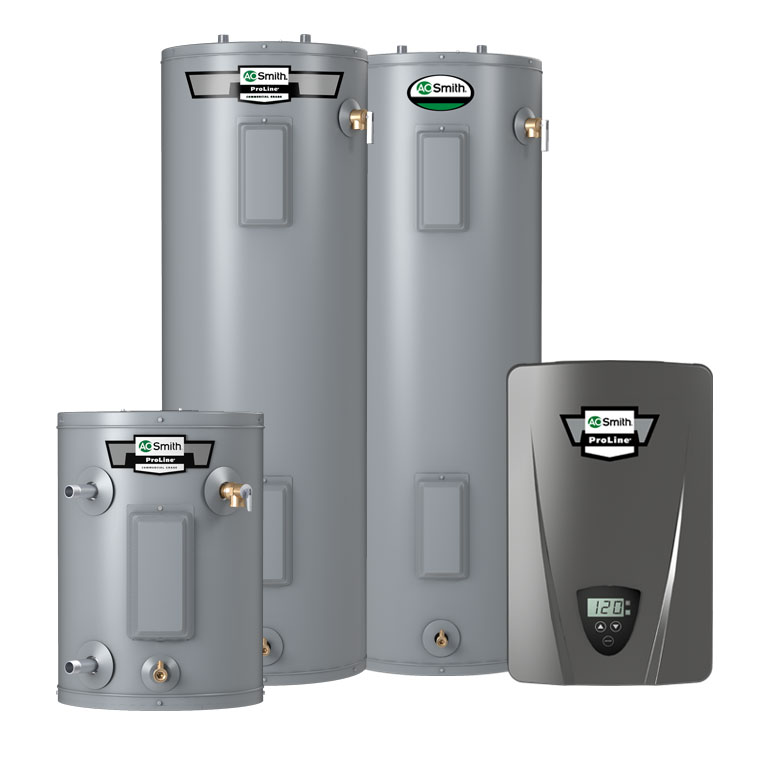
Tank Water Heater Problems
- Faulty Heating Elements: Leads to inadequate or no heating.
- Fix: Test and replace the heating elements if needed.
- Thermostat Issues: Causes temperature inconsistencies and can trip the high-limit safety switch (red reset button), often due to a grounded heating element or a faulty lower thermostat.
- Fix: Replace the thermostat or heating element for accurate temperature control.
- Gas Supply Problems: Prevents burner ignition and can also cause the pilot to extinguish.
- Fix: Ensure the gas valve is open and check for supply issues; may require professional assistance.
Tankless Water Heaters
- Mineral Buildup: Clogs and damages heating elements.
- Fix: Descale the heater annually, especially in hard water areas.
- Undersized: Struggles with high demand.
- Fix: Limit simultaneous hot water use or upgrade to a higher-capacity model.
- Ignition Failures: Stops the unit from starting.
- Fix: Check gas supply, venting, and ignition pack; may need professional help.
- Cold Water Sandwich: Unexpected cold water burst.
- Fix: Minimize demand fluctuation or consider a model with a built-in buffer tank.
Note: Some issues may vary depending on whether you have a gas or electric tankless model. Consult your owner's manual or a licensed plumber for model-specific guidance.

Common Electric Model Problems
- Tripped Circuit Breaker: A very common reason for an electric water heater not working is a tripped circuit breaker.
- Fix: Reset the breaker and check for electrical shorts, loose wires, and grounded heating elements.
- Faulty Heating Elements: Prevents heating.
- Fix: Replace faulty elements to restore heating efficiency.
Common Gas Model Problems
- Blocked Air Screens/Filters: Restrict combustion air, affecting burner performance.
- Fix: Clear any blocked air screens or filters and ensure adequate combustion air is available.
Plan your showers around recovery time—gas tanks need 30-40 minutes, electric tanks need 60-90 minutes.
Need Help From A Pro?
A. O. Smith water heaters are professionally installed by local independent contractors.
Discolored or Smelly Water
Discolored or smelly water from your hot water heater can be alarming, indicating potential issues. The problem can occur suddenly or build up over time. Below, we list some of the most common causes and straightforward fixes for both tanked and tankless water heaters and provide tips for electric and gas models.
Typical Causes of Discolored or Smelly Water and Fixes
- Bacterial Growth: This leads to smelly water, often described as a "rotten egg" smell.
- Fix: Flush the water heater with a solution of water and hydrogen peroxide. For persistent issues, increase the water temperature to 140 degrees F for a short period to kill bacteria, then return to a safer temperature. Install mixing valves to prevent scalding. Alternatively, installing an aluminum/zinc composite anode rod can also help eliminate odor-causing bacteria.
- Deteriorating Sacrificial Anode Rod: When it is consumed, corrosion accelerates
- Fix: Inspect and replace the anode rod every year or as needed.
Water Heater Is Leaking
Another common reason for a water heater not working is when it has developed a leak. A leaking water heater is a problem that should be addressed immediately to prevent water damage and potential safety hazards.

Common Causes and Fixes
- Loose Connections: Fittings or connections may become loose over time.
- Fix: Tighten any loose fittings or connections with a wrench.
- Faulty Temperature & Pressure Relief Valve (T&P Valve): If this valve is leaking, it could be due to high pressure or thermal expansion.
- Fix: Test the valve by lifting the lever and letting it snap back. If it continues leaking, replace the valve. Check water pressure, which should be 50-60 PSI and no higher than 80 PSI, and install a thermal expansion tank.
- Leaking Drain Valve: The valve at the bottom of the tank may not be fully closed or could be faulty.
- Fix: Ensure the drain valve is completely closed. Replace the valve if it continues to leak.
- Internal Tank Leak: Over time, the tank may corrode and develop a leak.
- Fix: Unfortunately, if the tank itself is leaking, the entire water heater usually needs to be replaced.
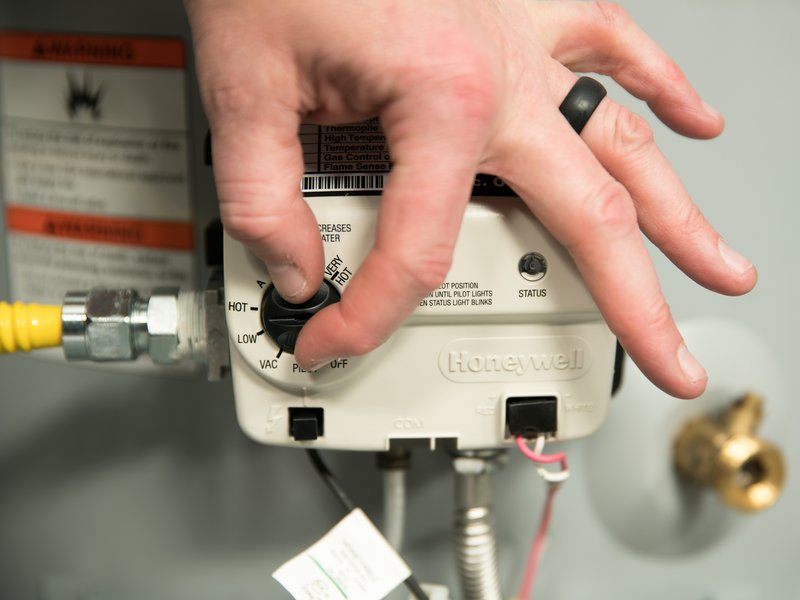
Common Causes of Leaking For Electric Water Heaters
- Heating Element Gaskets: Leaks can occur around the heating elements if the gaskets fail.
- Fix: Turn off the power and water supply, drain the tank, and replace the gaskets. If tightening the elements does not stop the leak, replace the elements.
Possible Causes of Leaking For Gas Water Heaters
- Gas Control Valve Leak: Rare but possible.
- Fix: This is a job for a professional. If you suspect a leak, turn off the gas supply and call a technician.

Rebates & Tax Credits
Rebate and incentive programs provide savings to consumers for the purchase of water heaters that meet certain energy efficiency standards.
Use A. O. Smith's Qualified Manufacturer (QM) code A5X5 for federal tax return form 5695.

Need Help From A Pro?
A. O. Smith water heaters are professionally installed by local independent contractors.
Tank Making Strange Sounds
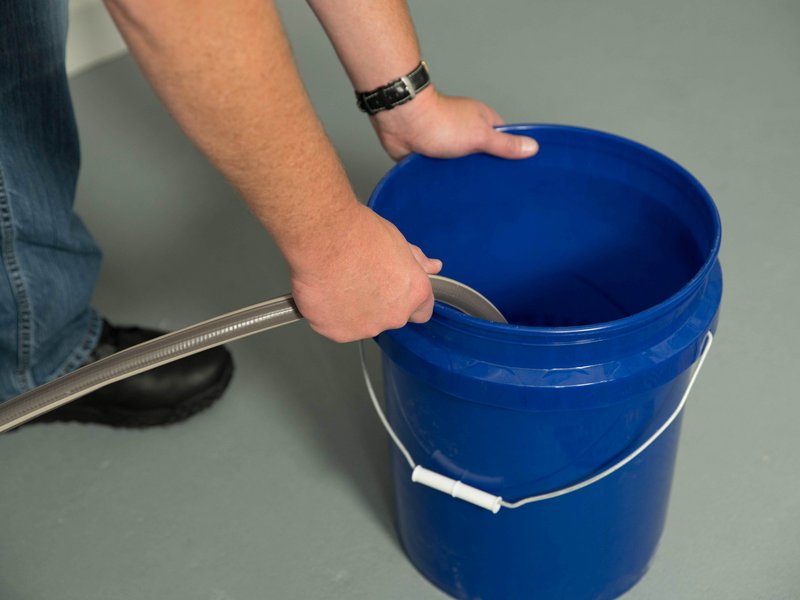
Strange sounds coming from a water heater can be disconcerting and often indicate underlying issues. From sediment buildup causing loud popping sounds and water hammer banging noises, to hissing sounds caused by scale on the heating element, these issues need prompt attention to prevent them from getting worse.
Why Your Tank is Making Sounds and Fixes
- Sediment Buildup: Hard water minerals accumulate at the bottom, causing popping or rumbling noises as the water heats.
- Fix: Drain and flush the tank to remove sediment. This may need to be done more frequently in areas with hard water.
- Water Hammer: A sudden stop in water flow can cause loud banging noises, known as water hammer.
- Fix: Install a water hammer arrestor at the water heater to absorb the shock.
- Heating Element Scaling: In electric water heaters, scale can form on heating elements, leading to crackling, popping or hissing sounds.
- Fix: Remove the elements to clean or replace them if heavily coated with scale.
- T&P Valve Noise: If the temperature and pressure relief valve frequently opens or makes noise, it might indicate high pressure.
- Fix: Check the home's water pressure and the heater's settings. A pressure-reducing valve or expansion tank may be needed.
Water Heater Condensation

Condensation around a gas water heater can sometimes be mistaken for a leak due to the amount of water it can produce. This phenomenon is particularly common in certain conditions and types of water heaters.
Common Causes of Condensation and Fixes
- High Demand Periods: During times of heavy hot water use, cold water entering the tank can cause the outer surface to cool and condense moisture from the air.
- Fix: This is usually temporary and resolves as the tank returns to its normal temperature. Ensure adequate ventilation to aid in moisture dissipation.
- First Use or Refill: Condensation can occur when a new water heater is filled for the first time or after being emptied and refilled due to the difference in temperature between the cold water inside the tank and the warmer external air.
- Fix: Allow some time for the water heater to reach its operating temperature; condensation should decrease as the tank warms up.
- High Humidity: In areas with high humidity, condensation is more likely to form on the outside of the tank.
- Fix: Reducing humidity in the room with a dehumidifier or improving ventilation can help.
Managing Condensation
- Insulation Blankets: For older tanks, especially in cooler climates or unheated spaces, installing an insulation blanket can help reduce condensation by keeping the outer surface of the tank warmer.
- Regular Maintenance: Ensure that all components, including vents and flues for gas models, are in good working condition to prevent operational issues that could contribute to condensation.
Need Help From A Pro?
A. O. Smith water heaters are professionally installed by local independent contractors.
Damaged Gas Control or Burner Assembly
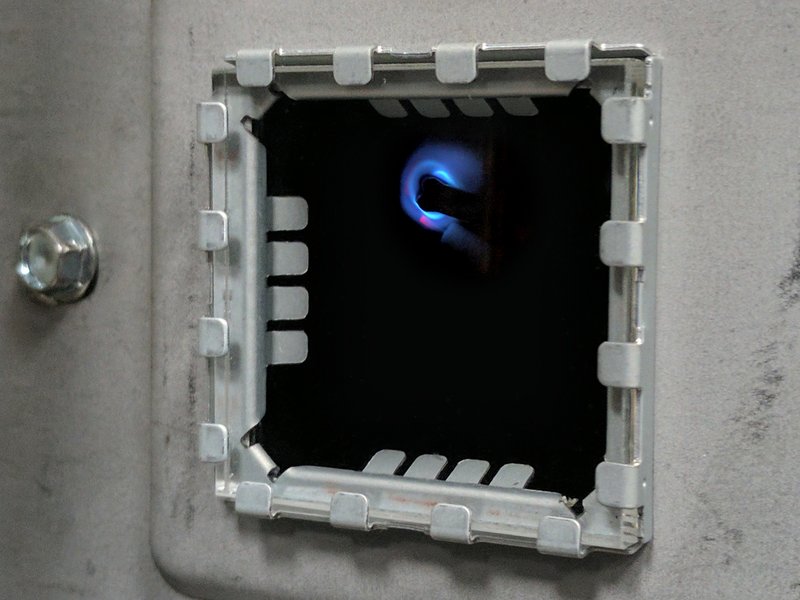
A damaged gas control or burner assembly in a gas water heater can significantly impact its efficiency and safety. Here’s what you need to know about identifying this issue and the steps you can take to resolve it.
Common Causes and Fixes
- Faulty Gas Control Valve: The gas control valve regulates the gas flow to the burner. A malfunction can lead to inadequate heating or failure to ignite.
- Fix: This component requires precise calibration and should be inspected and replaced by a professional if found to be defective.
- Clogged Burner Assembly: Dirt, debris, or rust can clog the burner assembly, affecting the flame quality and heating efficiency.
- Fix: Turn off the gas and water supply, and carefully clean the burner assembly. The burner should be inspected and cleaned of any debris once a year. For heavy buildup or damage, replacement by a professional is recommended.
Maintenance Tips for Quick Water Heater Recovery
Regular maintenance prevents the slow heating problems we've covered. Here's what makes a difference:
- Annual Tank Flushing: Drain a few gallons from your tank once a year to remove sediment before it builds up and slows heating.
- Check Your Anode Rod: This replaceable part protects your tank from corrosion—have a plumber check it once a year.
- Temperature Setting: Keep your thermostat at 120°F for the best balance of heating speed, energy costs, and safety.
- Professional Inspection: Have a licensed plumber look at your water heater every couple of years to catch small problems before they turn into expensive ones.
Hard water causes faster sediment buildup, so if you live in an area with mineral-heavy water, you'll need to flush your tank more often.
Learn About Tankless Water Heaters
There are times when a hot water heater not working calls for a replacement or upgrade. At A. O. Smith, we make choosing a hot water heater easier with our Water Heater Selector Tool. You can also search our directory of authorized, local professionals to install your new water heater for you.
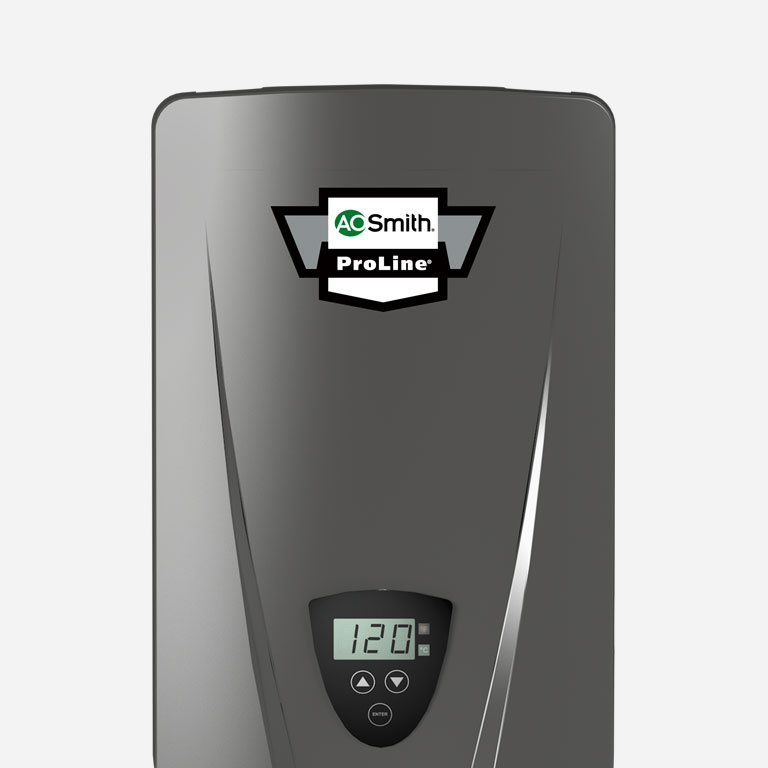
Electric Tankless Water Heaters
Electric tankless water heaters are celebrated for their compact size and lower initial installation cost. Ideal for smaller households or point-of-use applications, they run on electricity, making them a great choice for homes without natural gas service. These units are highly efficient, as they convert almost all the energy they consume into hot water, reducing energy waste.
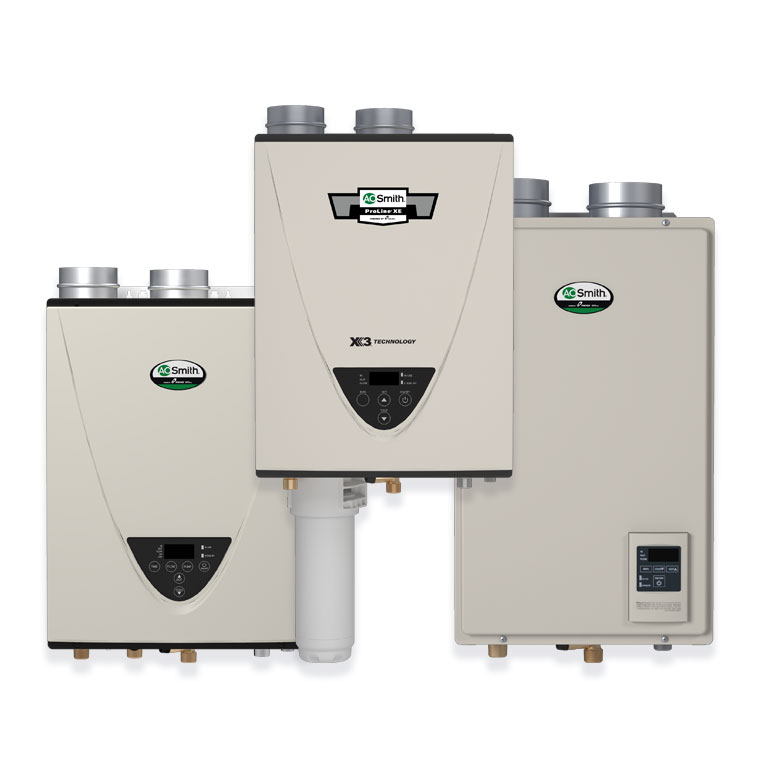
Gas Tankless Water Heaters
Gas tankless water heaters on the other hand, are suited for larger households with higher hot water demands. They typically offer higher flow rates than their electric counterparts and can be more cost-effective to operate in the long run, especially in regions where gas is cheaper than electricity. These units require venting to the outdoors but are an excellent choice for families looking to maximize hot water usage without sacrificing space or efficiency.

Water Heater Selector Quiz
Need Help From A Pro?
A. O. Smith water heaters are professionally installed by local independent contractors.
Frequently Asked Questions
The most common reason is a tripped circuit breaker, so check your electrical panel first. Other causes include faulty heating elements that need replacement, thermostat issues causing temperature inconsistencies, or a tripped reset button on the water heater itself. If the reset button has tripped, it means your water heater overheated. Press the red reset button to restore function, but if problems persist, contact a professional to diagnose faulty elements or thermostats.
To reset an electric water heater, first turn off power at the circuit breaker. Remove the access panel covering the upper thermostat to locate the red reset button (Energy Cut Off). Press the reset button firmly until you hear it click. If it clicks, your water heater overheated and tripped the safety switch. Restore power at the breaker and test for hot water. If the button trips repeatedly or you're uncomfortable performing these steps, contact a professional as repeated tripping indicates serious problems like shorted elements or faulty thermostats.
Your electric hot water system may not be heating due to a tripped circuit breaker, which is the most common cause. Other reasons include failed heating elements, malfunctioning thermostats, or a tripped Energy Cut Off reset button on the unit. Check your electrical panel first, then inspect the reset button near the upper thermostat. If these simple checks don't resolve the issue, you likely have faulty heating elements or thermostats requiring professional replacement.
For electric water heaters, check the circuit breaker first to see if it's tripped, then reset it if needed. For gas water heaters, verify the pilot light is lit and the gas valve is open. These are the simplest and most common causes of no hot water. If power and gas supply are working properly, check the reset button on electric models or look for error codes on the gas control valve before calling a professional for more complex issues.