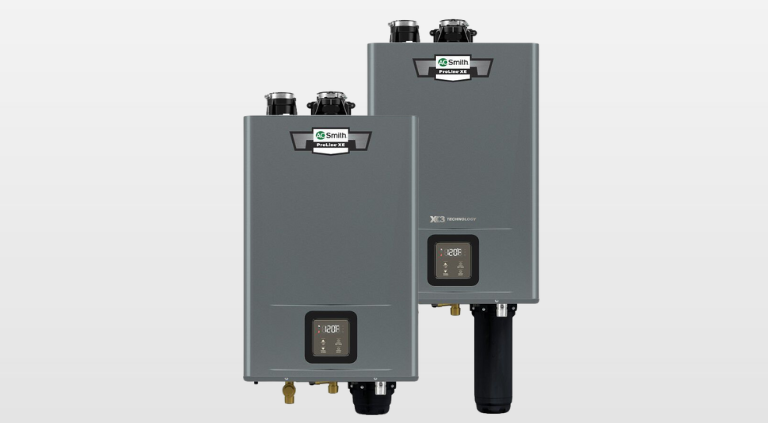
.jpg "range of tankless water heaters")
Are Gas Tankless Water Heaters Efficient?
Yes, gas tankless water heaters are efficient—often more so than standard tank water heaters. They achieve efficiency ratings between 0.82 and 0.95, compared to typical gas tank ratings of 0.60 to 0.70. This means they convert more of the fuel they use into hot water for your home rather than wasting it.
Knowing what these efficiency numbers mean and how they translate to real savings can help you decide if a gas tankless system makes sense for your home. Let's break down the facts about gas tankless efficiency, what affects performance, and when these systems deliver the best results.
Ready to make the switch to gas tankless? Use the residential water heater selector to find options that work for your needs.
Understanding Water Heater Efficiency Ratings

Water heater efficiency gets measured using the Uniform Energy Factor, or UEF. Think of it as a grade showing how efficiently your water heater converts fuel into hot water. A 0.95 UEF rating means 95% efficiency with minimal energy waste—most of the gas you pay for actually heats your water instead of escaping as wasted heat.
Gas tankless water heaters range from 0.82 UEF for non-condensing models up to 0.95 UEF for condensing units. Standard gas tank water heaters typically score between 0.60 and 0.70 UEF. That gap represents a substantial difference in wasted versus productive fuel use.
The highest-efficiency gas tankless models earn ENERGY STAR® certification by meeting the 0.95 UEF threshold. According to the U.S. Department of Energy , tankless water heaters can be 14% to 34% more energy efficient than conventional storage tank systems. Homes using less than 41 gallons per day see up to 34% better efficiency, while homes using around 86 gallons daily still achieve about 14% improvement.

Water Heater Selector Quiz


Need Help From A Pro?
A. O. Smith water heaters are professionally installed by local independent contractors.
How Gas Tankless Water Heaters Save Energy

The main efficiency advantage comes from eliminating standby heat loss. Standard tank water heaters keep 40 to 50 gallons of water heated around the clock, even when no one is using hot water. Your water heater works constantly to maintain temperature, losing heat through the tank walls and burning fuel to replace it.
Gas tankless systems only heat water when you turn on a faucet. Open a hot water tap, and the system springs into action. Close the tap, and it shuts down completely. No fuel gets burned, maintaining a reservoir of hot water that might sit unused for hours.
Your family probably uses hot water for two or three hours total each day—morning showers, evening dishes, occasional laundry. A tank system burns gas for all 24 hours. A tankless system only operates during those few hours of actual use.
Non-condensing gas tankless units achieve around 0.82 UEF. They heat water effectively but allow exhaust heat to escape through the vent. Condensing models reach up to 0.95 UEF by capturing that exhaust heat and transferring it back into incoming water. This heat recovery process squeezes extra efficiency from every unit of gas burned, earning condensing models their ENERGY STAR® status.
What Affects Gas Tankless Efficiency
Your household's usage patterns matter more than you might expect. Homes using less than 41 gallons daily see up to 34% better efficiency compared to tank systems. Homes using 86 gallons still benefit with about 14% improvement. Tankless systems eliminate standby loss regardless of usage, but savings become more dramatic when the tank would have spent more time just maintaining temperature.
Incoming water temperature plays a big role, too. Cold climates mean your tankless system works harder to heat 45°F water up to 120°F compared to heating 70°F water in warmer areas. This extra work affects both flow rate and efficiency.
Proper sizing directly impacts efficiency and performance. An undersized unit runs constantly, struggling to keep up with demand. An oversized unit costs more upfront without efficiency benefits—you're paying for capacity you don't need. Gas tankless sizing depends on the flow rate measured in gallons per minute (GPM) and the temperature rise required.
Installation quality also affects long-term efficiency. Condensing models need proper venting to work at their best. Gas line sizing matters for consistent performance. Professional installation ensures the system operates as it should.

Adapt® NC (Non-Condensing)


Hot water only when needed with on-demand tankless

Zero yearly descaling with integrated X3® Scale Prevention Technology

Copper Heat Exchanger
Adapt® SC (Standard Condensing)

Hot water only when needed with on-demand tankless
Zero yearly descaling with integrated X3® Scale Prevention Technology
Dual copper & stainless steel heat exchangers

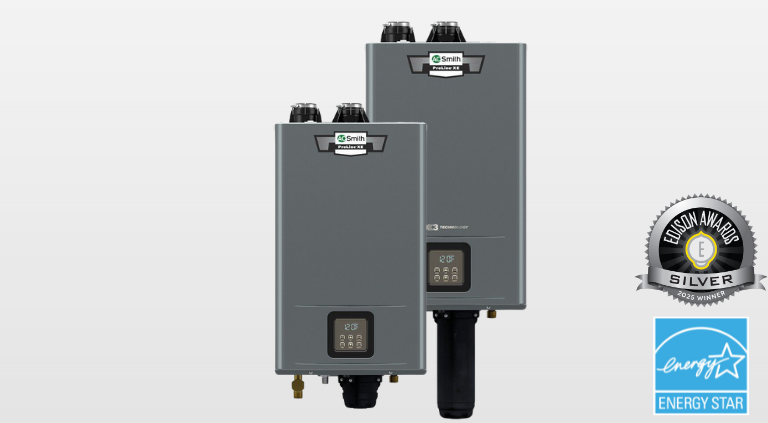
ENERGY STAR® Certified with up to .95 UEF

Save on installation with rebates & tax incentives
Adapt®+ Premium Condensing

Hot water only when needed with on-demand tankless
Zero yearly descaling with integrated X3® Scale Prevention Technology

Single heavy-duty stainless steel heat exchanger
ENERGY STAR® Certified with up to .95 UEF
Save on installation with rebates & tax incentives

Instant hot water with integrated recirculation pump

What Efficiency Means for Your Energy Bills
Higher UEF ratings translate directly to lower monthly operating costs. The more efficiently your water heater converts fuel to hot water, the less gas you burn and the lower your utility bills. The exact savings depend on your household's hot water usage, local gas rates, and climate.
Gas tankless water heaters typically last about 20 years with proper maintenance—roughly twice as long as standard tank water heaters. This extended lifespan means more years of lower operating costs, helping offset the higher initial purchase price.
Gas tankless water heaters have a higher upfront cost than standard tanks.
Actual savings vary based on your specific situation. Households with high hot water usage in moderate climates typically see the most dramatic bill reductions. Every home is different, so consider your usage patterns and local energy costs when evaluating potential savings.
Check out our Rebates Center for all available federal and local rebates in your area.
When Gas Tankless Efficiency Works Best
Gas tankless water heaters deliver maximum efficiency benefits in certain situations. They excel at back-to-back hot water use—multiple family members taking showers one after another, for example. Where a tank might run out of hot water and force later users to wait for reheating, a properly sized tankless unit keeps delivering.
Smaller to medium households often see the best efficiency gains. The elimination of standby loss provides consistent benefits, while moderate usage patterns stay well within the system's flow rate capabilities. Long-term homeownership gives you time to recoup the higher initial investment through years of lower operating costs.
That said, gas tankless systems do come with trade-offs. The higher upfront cost compared to standard tanks requires a long-term view. Flow rate limitations mean running multiple high-demand fixtures simultaneously—say, filling a large bathtub while two people shower—might exceed the system's capacity. Larger homes sometimes need multiple tankless units to cover all usage scenarios.
Standard tank water heaters might make more sense in specific situations. Homes with very large simultaneous hot water demands benefit from the storage capacity. Extremely cold climates with very low incoming water temperatures can challenge tankless performance. Budget constraints matter too, though the federal tax credit helps through the end of 2025.
Rebates & Tax Credits
Rebate and incentive programs provide savings to consumers for the purchase of water heaters that meet certain energy efficiency standards.
Use A. O. Smith's Qualified Manufacturer (QM) code A5X5 for federal tax return form 5695.

Need Help From A Pro?
A. O. Smith water heaters are professionally installed by local independent contractors.
Choosing an Efficient Gas Tankless System
Start by honestly evaluating your household's hot water needs. How many people typically shower within the same hour during busy morning routines? Do you run dishwashers and washing machines while people bathe? What's your local climate and typical incoming water temperature?
Your budget perspective matters too. Can you afford the higher upfront cost to gain lower operating expenses over time? Does the federal tax credit make the investment more attractive right now?
Look for specific efficiency features when comparing systems. ENERGY STAR® certification indicates 0.95 UEF performance. Condensing technology delivers that efficiency through heat recovery. Most importantly, make sure the tank is sized properly for your home.
Professional assessment makes a difference. Certified installers understand local climate, household usage patterns, and what your home needs technically. Manufacturer sizing tools give you recommendations based on your family's specific shower habits, usage needs, and home setup.
Finding the Right Solution
A. O. Smith offers ENERGY STAR® certified condensing models achieving 0.95 UEF efficiency. The ADAPT® series includes integrated X3® Scale Prevention Technology that maintains efficiency throughout the unit's life by eliminating annual descaling requirements. These models come with a 15-year warranty covering scale-related failures.
The systems are designed with installation advantages, including 2-inch venting and half-inch gas line requirements. A. O. Smith's XPERT Residential Water Heater Selector provides recommendations based on your household's needs. Certified local installers understand the requirements for efficiency and can ensure proper setup.
Use the water heater selector tool to find the right model for your home, or connect with a certified local installer who can assess your specific situation.
Rebates & Tax Credits
Rebate and incentive programs provide savings to consumers for the purchase of water heaters that meet certain energy efficiency standards.
Use A. O. Smith's Qualified Manufacturer (QM) code A5X5 for federal tax return form 5695.
Need Help From A Pro?
A. O. Smith water heaters are professionally installed by local independent contractors.
A. O. Smith: Reliable Water Heating Solutions
For over 85 years, A. O. Smith has been developing water heating solutions for American homes and businesses. From traditional tank systems to advanced tankless and heat pump technology, we design products that deliver reliable hot water backed by nationwide professional installation support.
Frequently Asked Questions
Gas tankless water heaters achieve 0.82 to 0.95 UEF compared to 0.60 to 0.70 UEF for standard gas tanks. They can be 14% to 34% more energy efficient, depending on household usage patterns.
Non-condensing models reach about 0.82 UEF by heating water on demand. Condensing models achieve up to 0.95 UEF by capturing exhaust heat and transferring it back into incoming water, earning ENERGY STAR® certification.
Yes, ENERGY STAR® certified models with 0.95 UEF qualify for a federal tax credit through December 31, 2025—30% of project costs up to $600 maximum.